MAZIKO — Cash Plus for Nutrition and Child Development in Malawi
Share:


Maziko (meaning "Foundation" in Chichewa) is Save the Children's flagship cash-plus-for-nutrition project in Malawi, implemented in partnership with GiveDirectly, the International Food Policy and Research Institute and the government of Malawi. It combines maternal and child cash transfers with multi-sectoral social and behaviour change interventions to address the root causes of chronic malnutrition and poor child development. Launched in November 2021, the project has reached around 57,000 households with pregnant women and children under five across Ntcheu and Balaka districts.
Photo: Sam Vox - Save the Children
Women dancing during a care group session for mothers, in their community in Balaka district, Malawi.
Project Overview
Building Foundations for the First 1,000 Days
Malawi has one of the highest rates of chronic malnutrition in Southern Africa. One in three children under five are stunted and nearly half of children 3-5 years are facing developmental delays. The first 1,000 days — from conception to a child’s second birthday — are a critical window for brain and physical development; investments made during this period yield lasting returns on children’s lifelong health, education and productivity, while the effects of missing this window are largely irreversible.
Most households in Malawi face high levels of food insecurity and chronic poverty, exacerbated by regular climate and economic shocks. Families also have limited access to essential health and nutrition services, some having to walk 2-3 hours to reach the nearest health facility. Mothers are exhausted by household chores and childcare with men either absent, working elsewhere or disengaged. A recent analysis by Save the Children of social protection programmes in Malawi, found that only 2% of children under two years are receiving any form of social support from the government — a glaring gap during the critical first 1,000 days of a child’s life. Maziko was designed to fill that gap, by combining monthly cash transfers with social and behaviour change support across nutrition, early childhood development, food security and livelihoods, gender, and maternal mental health.
Context and Drivers
Why a Multi-Sector Approach?
Maziko’s inception studies, conducted before the interventions began, identified a number of drivers of malnutrition and poor child development, including low quality diets and feeding practices, poor hygiene, inadequate care and stimulation, limited access to health services, poor maternal mental health and gender inequality, chronic poverty and food insecurity exacerbated by climate and economic shocks. Only 9% of children under 2 years had an adequate diet (minimum acceptable diet), with the two-family meals a day generally consisting of just maize and overboiled green leaves. Hygiene conditions were poor and diarrhoea so common that it was seen as normal and rarely got treated. One in three households was female headed, with men largely absent, leaving all household chores and childcare to women who were exhausted and tired and were only able to provide basic care for their child. Adult supervision and interaction with children were limited. Maternal depression was high with 26% reporting symptoms of depression. One in 10 mothers was under 18 years old, which affected her own and her child’s health and development. The Maziko package was designed to address all these issues.
The Maziko Package
Cash Transfers Plus an Integrated SBC Package
Maziko interventions included:
- Between Nov 2023 and March 2025, Cash transfers were delivered monthly by GiveDirectly on an unconditional basis, to over 5,000 households with a pregnant woman or a child under 3 years for 30 months. The Cash transfers were equivalent to either $17 or $43 per month, depending on the intervention arm (see research design below).
Save the Children in partnership with Balaka and Ntcheu Districts, supported the roll out of a multi-sector Social and Behaviour Change (SBC) and community capacity strengthening intervention package to improve caregiving behaviours, maternal wellbeing, gender equality and household access to nutritious foods. The SBC package has reached around 57,000 households and includes:
- Care Groups: the government of Malawi’s community outreach system for nutrition, which involves training community volunteer mothers (promoters and cluster leads) to conduct regular home visits and counselling to households with a pregnant woman or young child to support uptake of recommended caregiving practices across health, nutrition and early child development
- Male Champions: a Save the Children designed gender transformation intervention which involves training male champions (volunteer men in the community) and father leads to facilitate dialogue sessions with fathers and couples in their neighbourhood to improve gender equality and increase partner support for household chores and childcare.
- Caring for the Caregiver: a UNICEF designed intervention, adapted to the Malawi context by the government to support maternal mental wellbeing. All community volunteers (promoters, cluster leads, male champions and father leads) were trained to integrate Caring for the Caregiver elements into their group and counselling sessions.
- Nutrition Sensitive Agriculture: the government of Malawi’s Integrated Homestead Farming and Climate Smart Agriculture curriculum was used to train lead farmers, households and Community-Based Childcare Centres (CBCCs) to grow more nutritious foods using climate smart technologies. It also includes capacity strengthening of Village Savings and Loans groups to increase savings and investment.
The Care Groups and CBCCs served as platforms for all the SBC interventions to reach as many households as possible through a large network of community volunteers. Whilst cash transfers were sent to mothers directly through their mobile phones. People-Driven Design processes — grounded in immersion research — informed the SBC component, which identified small doable actions to promote across the SBC package. It also included a digital component, in partnership with Viamo, which leverages households’ and frontline volunteers’ existing mobile phones to gather data and reinforce messages and trainings.
Research Component
Generating Evidence for Malawi’s Social Protection System
The project included a large research component to generate evidence to influence Malawi’s national Social Protection system and multi-sector nutrition strategy. It included a Cluster Randomised Trial led by IFPRI (International Food Policy Research Institute) in partnership with Palm Consult, which was conducted in 156 communities, and compared four intervention arms to assess the impact and cost effectiveness of two cash transfer sizes combined with the multi-sector SBC package described above:
- Arm 1 — Nutrition SBC – Care Group(Standard of Care)
- Arm 2 — Multi-sector SBC: Care Group +Male Champions, Caring for the Caregiver and Nutrition Sensitive Agriculture
- Arm 3 — Multi-sector SBC +Low Cash Transfer (~$17/month)
- Arm 4 — Multi-sector SBC +High Cash Transfer (~$43/month)
Research Findings
Improvements across all the drivers of malnutrition with largest impact in poorest households
The endline survey was conducted in May-June 2025, three years after the baseline survey, with preliminary results shared with national stakeholders in Malawi in December 2025.
Overall, the research found that, relative to the Standard of Care (Nutrition SBC – Care Group only arm ):
- Cash transfers(both high and low amounts) combined with the multi-sector SBC package improved household food security, women’s empowerment and maternal and child diets.
- The multi-sector SBC+ High Cash Transfer also increased savings, assets and revenues, reduced maternal depression scores and symptoms, reduced stunting by 12% in the poorer households, and improved child development amongst girls.
- The multi-sector SBC + Low Cash Transfer had an impact on most intermediary outcomes (food security, women’s empowerment, diets) but did not improve linear growth and child development. There was no significant difference between high and low cash effects for household food security, women’s empowerment, and maternal and child’s dietary diversity.
- Multi-sector SBC interventions (Male Champions, Caring for the Caregiver and Nutrition Sensitive Agriculture), when delivered without cash, had no independent effect on any of the outcomes listed above. The main Nutrition SBC intervention (Care Groups) was the Standard of Care (delivered across all 4 arms) and was therefore not evaluated.
These findings strengthen the evidence that maternal and child cash transfers combined with SBC interventions are an effective way to improve multiple drivers of malnutrition and poor child development. In times of limited resources, the priority should be reaching the poorest first 1,000 day households with adequate cash transfer amounts.
Further analyses are underway investigating the effects of climate shocks, the role of individual SBC components, and the cost and cost effectiveness of the interventions. We are also planning a Qualitative Evaluation using the QuIP methodology to understand the drivers of change.
Partners and Funders
A Multisectoral Collaboration
The project was generously funded by Power of Nutrition, with co–funding from the Conrad Hilton Foundation, the United Kingdom Foreign, Commonwealth and Development Office (FCDO), Irish Aid, and Save the Children, GiveDirectly private funding.
Contacts
Have Questions?
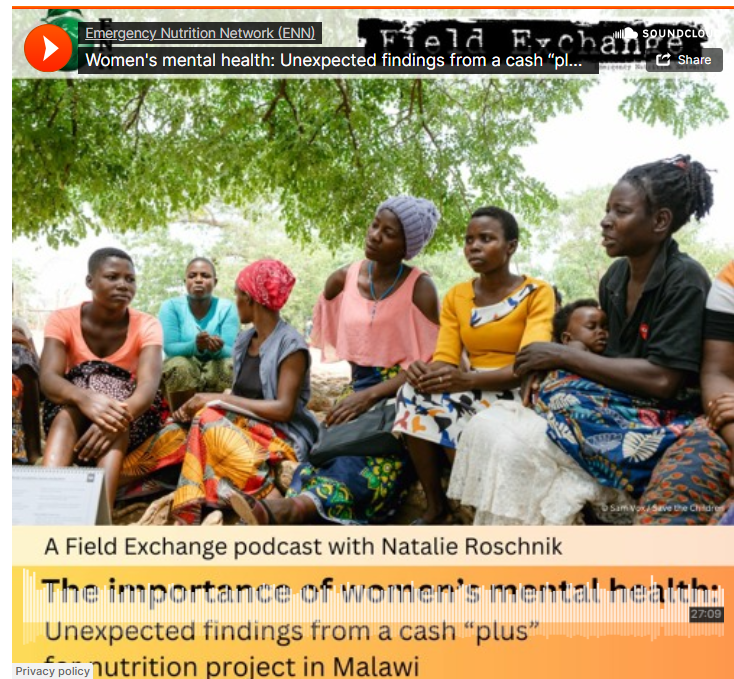
For more information about the Maziko project and its research outputs, please contact Brenda Phiri, Maziko project manager, Save the Children International; Natalie Roschnik, Senior Nutrition Adviser at Save the Children UK, [N.Roschnik@savethechildren.org.uk] or explore the full collection of reports, briefs, scientific publications, and videos below.
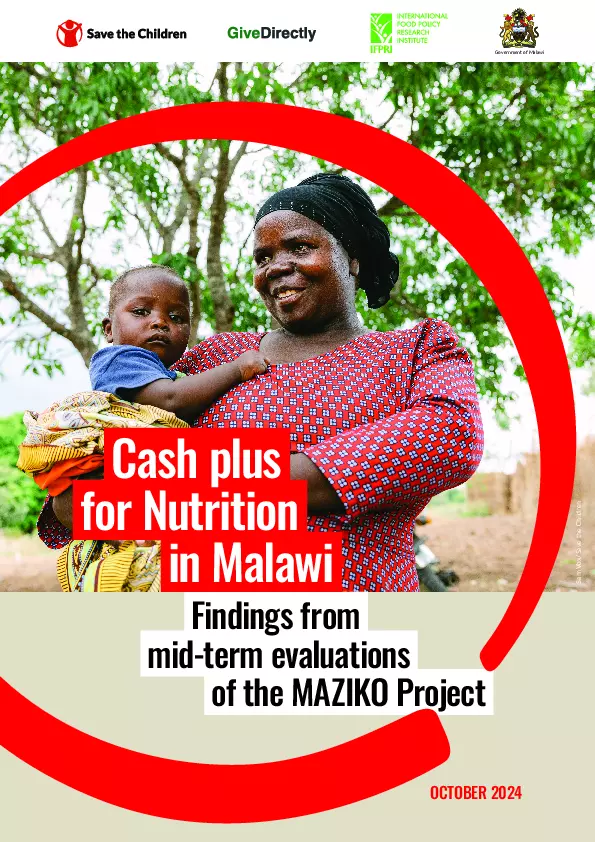
Photo: Sam Vox - Save the Children
Alinafe* and her 7-month-old son Chawezi* near their home in Balaka district, Malawi.
Maziko Related Videos

Maziko Related Videos
3 resources


Related Documents




Showing 4 of 5
Related Documents
Showing 4 of 6

Share
Link