Estudios, Revisiones e Investigación
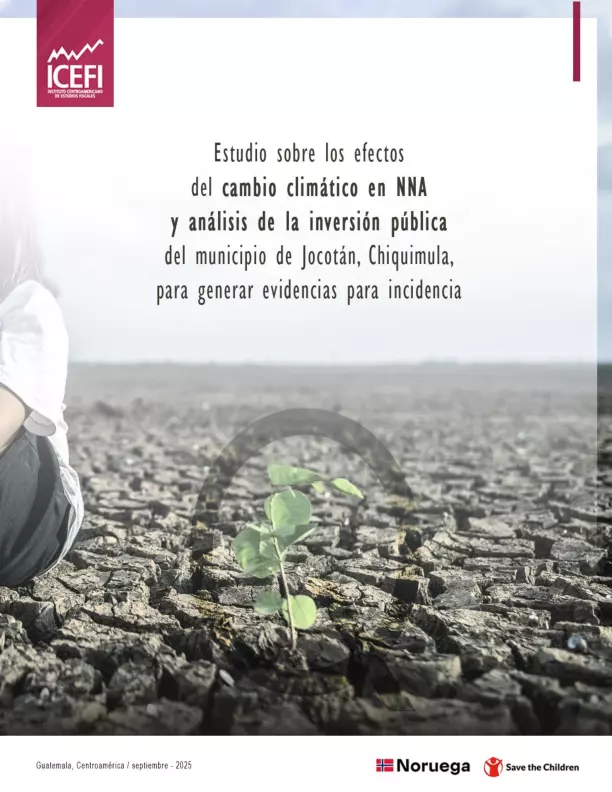
Estudio sobre los efectos del cambio climático en NNA y análisis de la inversión pública del municipio de Jocotán, Chiquimula, para generar evidencia para incidencia (Guatemala, 2025)

Publication year:
2025

Español

Format:
(3.3 MiB)

Publisher:
ICEFI, Instituto Centroamericano de Estudios Fiscales
El municipio de Jocotán, Chiquimula, enfrenta una creciente vulnerabilidad frente al cambio climático debido al aumento proyectado de las temperaturas, la reducción de las lluvias y la intensificación de amenazas como olas de calor, sequías y deslizamientos. Este estudio analiza cómo estos fenómenos afectan los derechos, la seguridad alimentaria y las condiciones de vida de niñas, niños y adolescentes, así como la respuesta de la inversión pública local y nacional. Los resultados muestran que la niñez es especialmente vulnerable a los impactos climáticos sobre la salud, el acceso al agua, la educación y la disponibilidad de alimentos. Asimismo, se identificó que menos del 1 % del presupuesto municipal corresponde a acciones climáticas directas, mientras que la mayor parte de los recursos se concentra en medidas indirectas relacionadas con agua, saneamiento y gestión ambiental. Las consultas realizadas con adolescentes del municipio confirmaron que las dificultades de acceso al agua, las interrupciones de actividades por calor y lluvias extremas, y los riesgos para la seguridad alimentaria ya forman parte de su realidad cotidiana. Estos hallazgos evidencian la necesidad de fortalecer las estrategias de adaptación, aumentar la inversión pública sensible al cambio climático y promover una mayor participación de la niñez y adolescencia en la construcción de comunidades más resilientes.
English:
The municipality of Jocotán, Chiquimula, faces increasing vulnerability to climate change due to projected rising temperatures, declining rainfall, and the intensification of hazards such as heatwaves, droughts, and landslides. This study examines how these climate-related phenomena affect the rights, food security, and living conditions of girls, boys, and adolescents, as well as the response of local and national public investment.
The findings show that children and adolescents are particularly vulnerable to the impacts of climate change on health, access to water, education, and food availability. The study also found that less than 1% of the municipal budget is allocated to direct climate action, while most resources are concentrated on indirect measures related to water, sanitation, and environmental management.
Consultations conducted with adolescents in the municipality confirmed that difficulties in accessing water, disruptions to daily activities caused by extreme heat and heavy rainfall, and threats to food security are already part of their everyday reality. These findings highlight the need to strengthen climate adaptation strategies, increase climate-sensitive public investment, and promote greater participation of children and adolescents in building more resilient communities.
Read full abstract
View & Download


Document information
Content type
Country
Rights
© Author/Publisher
Found a mistake? Help us improve!
If you have noticed a document assigned to the wrong author or any other inaccuracies, let us know! Your feedback helps us keep our data accurate and useful for everyone.
 Subscribe and receive reading selections
 Save all your favorite materials for future use
 Upload research & contribute to the collection
Share

Link