
Study: Research
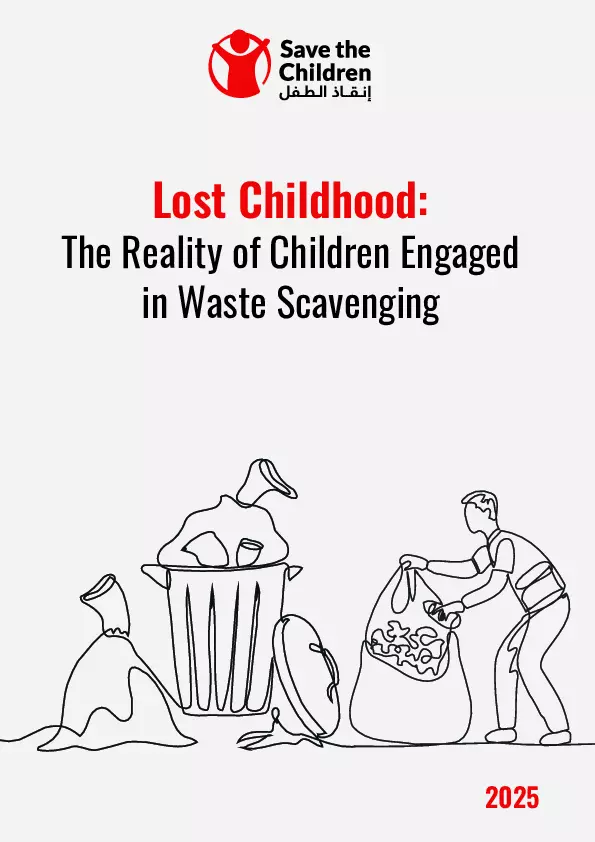
Lost Childhood: The Reality of Children Engaged in Waste Scavenging (Jordan, 2025)

Publication year:
2025

English, Arabic

Format:
(3.9 MiB)

Publisher:
Save the Children Jordan
Children engaged in waste scavenging represent one of the most hidden and hazardous forms of child labor in Jordan. This study examines the lived realities of children working in waste dumps across East Amman, Rusaifeh, and Zarqa, aiming to analyze the socioeconomic, cultural, and structural drivers of child labor and to assess children’s family, living, and educational conditions. Save the Children Jordan conducted a comprehensive mixed-methods study involving child laborers and their caregivers, exploring demographics, household dynamics, financial pressures, housing conditions, and access to education. The findings identify poverty, social norms, and institutional gaps as key drivers sustaining child labor in the waste scavenging sector, while exposing the severe risks, unsafe working conditions, and long-term consequences faced by children. The study also evaluates existing response programs and highlights geographical and supply-chain factors contributing to the persistence of child labor. These findings provide critical evidence to inform policy reform and the design of targeted interventions aimed at preventing child labor and improving the protection and well-being of affected children.
Read full abstract
View & Download

Autodetected language
English
1 Documents


Other languages
Document information
Publisher
Content type
Country
Region
Rights
© Author/Publisher
Found a mistake? Help us improve!
If you have noticed a document assigned to the wrong author or any other inaccuracies, let us know! Your feedback helps us keep our data accurate and useful for everyone.
 Subscribe and receive reading selections
 Save all your favorite materials for future use
 Upload research & contribute to the collection
Share

Link