
Study: Assessments
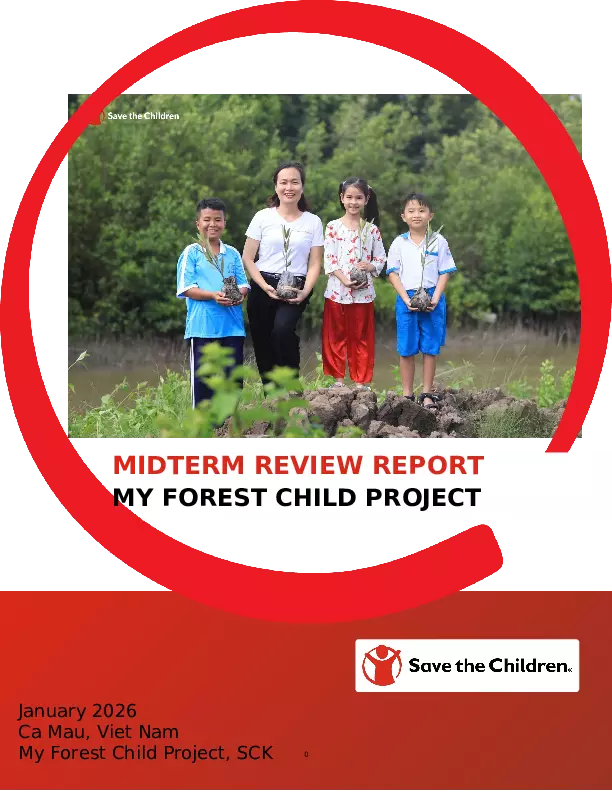
Midterm Review Report: My Forest Child Project (Vietnam, 2026)

Publication year:
2026

English

Format:
(938.6 KiB)

Publisher:
Save the Children Vietnam
The My Forest Child (MFC) project, implemented by Save the Children in partnership with the Nam Can District People’s Committee in Ca Mau Province, aims to strengthen climate resilience among coastal communities through child-led climate education, mangrove ecosystem restoration, and climate-adaptive livelihoods. This midterm review assesses progress across three core outcome areas—climate awareness, mangrove management, and ecological shrimp livelihoods—drawing on mixed-method evidence and comparison with baseline findings.
Findings indicate overall positive progress, with 15 out of 20 indicators meeting or exceeding targets and strong performance at output level. Outcome-level results show moderate to strong gains, including increased climate awareness among children/youth (53%) and community members (55%), expansion of community-managed mangrove areas (14.5 hectares, 145% of target), and significant uptake of climate-adaptive shrimp farming practices (98% adoption). However, critical gaps remain. Awareness of local climate change manifestations is limited, community technical capacity in mangrove management requires strengthening, and no functional collective market structures for shrimp production have been established (0% achievement).
The review also highlights GESI-related challenges, including gender disparities in adult awareness outcomes and barriers to meaningful participation of women, children with disabilities, and other vulnerable groups.
To ensure sustainable impact by project endline, priority actions include: (i) deepening practical, locally relevant climate awareness; (ii) strengthening community capacity and ownership in mangrove management; (iii) establishing and operationalizing shrimp producer groups; and (iv) applying targeted, inclusive strategies to address structural participation barriers.
Overall, the project demonstrates strong potential for achieving its intended outcomes, provided that identified gaps—particularly at outcome and system levels—are addressed in the remaining implementation period.
Read full abstract
Authors


View & Download

English
1 Documents


Document information
Publisher
Authors
Content type
Country
Region
Rights
© Author/Publisher
Found a mistake? Help us improve!
If you have noticed a document assigned to the wrong author or any other inaccuracies, let us know! Your feedback helps us keep our data accurate and useful for everyone.
 Subscribe and receive reading selections
 Save all your favorite materials for future use
 Upload research & contribute to the collection
Share

Link