Study: Assessments
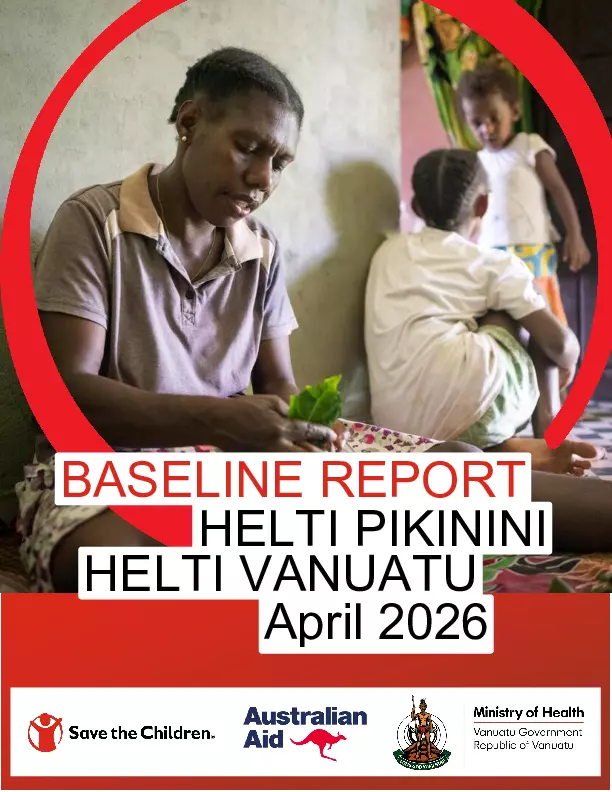
Baseline Report for Helti Pikinini, Helti Vanuatu

Publication year:
2026

English

Format:
(2.4 MiB)

Publisher:
Save the Children Australia
The Helti Pikinini, Helti Vanuatu (HPHV) project is a four-year initiative (2025-2029) implemented by Save the Children Vanuatu to reduce undernutrition and WASH-related health concerns among children aged 0-5 years in Sanma and Shefa Provinces. This baseline study was conducted to establish pre-intervention conditions, inform programme design and adaptive management, and provide a reference point for future evaluations. Data were collected between December 2025 and March 2026 using a mixed-methods approach, including household surveys with 595 caregivers of children under five and 15 key informant interviews with government, health, civil society, and market stakeholders.
Findings indicate that child undernutrition remains a significant public health challenge in target communities. Stunting affected 28.8% of children under five, closely aligning with national estimates, while feeding practices reflected low dietary quality despite relatively high meal frequency. Only 34% of children aged 6-23 months met minimum dietary diversity requirements and 29% achieved a minimum acceptable diet. Consumption of sugary foods and drinks was common, including among very young children. Caregiver knowledge of optimal child feeding was limited, particularly regarding continued breastfeeding and appropriate complementary feeding practices.
Food insecurity was widespread, with marked differences between provinces and substantially higher levels observed in Efate communities. Twenty Vatu markets played a central role in household food access, yet offered limited dietary diversity and often lacked adequate hygiene infrastructure. WASH conditions were similarly mixed, with only 54% of households using improved drinking water sources and 24% demonstrating adequate knowledge of key WASH practices. Functional handwashing facilities and soap availability were frequently absent.
Qualitative findings highlighted the importance of sustained behaviour change approaches, youth engagement, inclusive programming, and stronger community support mechanisms. Gender norms, disability, caregiving arrangements, and household decision-making dynamics significantly influenced nutrition and hygiene practices. While national nutrition and WASH policy frameworks were viewed as supportive, stakeholders identified implementation capacity, coordination, and resourcing as ongoing constraints.
The baseline findings reinforce the need for an integrated approach that combines nutrition, WASH, food security, child development, and social and behaviour change interventions. They provide a robust evidence base to guide programme implementation, targeting, and future measurement of project outcomes.
Read full abstract
View & Download

English
1 Documents


Document information
Publisher
Content type
Country
Region
Rights
© Author/Publisher
Found a mistake? Help us improve!
If you have noticed a document assigned to the wrong author or any other inaccuracies, let us know! Your feedback helps us keep our data accurate and useful for everyone.
 Subscribe and receive reading selections
 Save all your favorite materials for future use
 Upload research & contribute to the collection
Share

Link