Reports
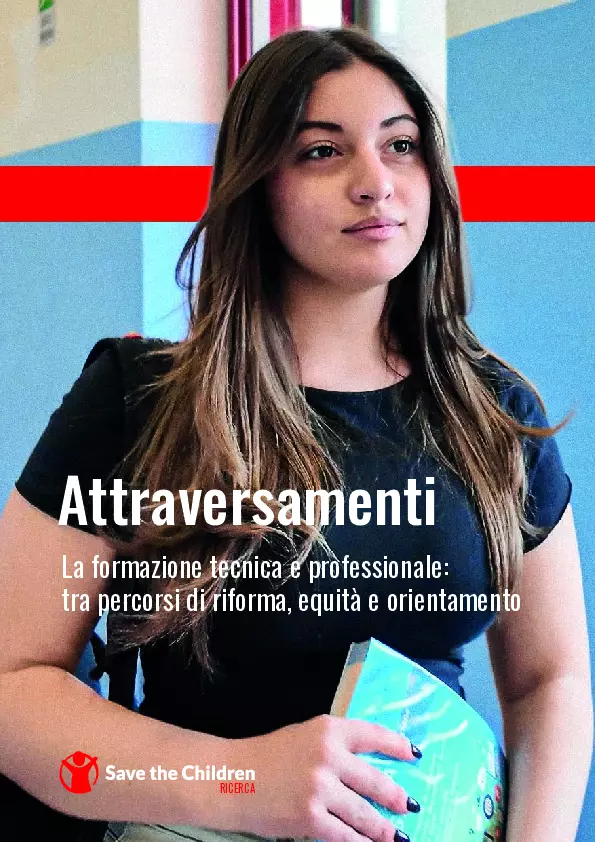
Attraversamenti. La formazione tecnica e professionale: tra percorsi di riforma, equità e orientamento

Publication year:
2026

English

Format:
(7.9 MiB)

Publisher:
Save the Children Italy
Italian:
Il dossier analizza la riforma della filiera formativa tecnologico-professionale, che introduce il modello ‘4+2’, avviato in forma sperimentale nell’anno scolastico 2024/25 e destinato a entrare nell’offerta ordinaria del secondo ciclo a partire dall’a.s. 2026/27.
La ricerca osserva la riforma dalla prospettiva dei diritti educativi delle e degli adolescenti e approfondisce le opportunità offerte dai nuovi percorsi, la qualità dell’orientamento, la possibilità di compiere scelte consapevoli e i passaggi tra istruzione tecnica e professionale, IeFP e ITS Academy. Particolare attenzione è dedicata al tema dell’equità educativa e al rischio che condizioni sociali, background migratorio, genere o territorio possano incidere sulle scelte e sulle opportunità future di studenti e studentesse, creando forme di ‘selezione implicita’.
Attraverso dati, osservazioni qualitative e proposte di policy, il dossier individua le condizioni necessarie perché la riforma possa tradursi in percorsi di qualità, accessibili e capaci di valorizzare le aspirazioni e il potenziale di ogni ragazzo e ragazza.
English:
The report “Crossings. Technical and Vocational Education and Training: Reform Pathways, Equity and Guidance” examines the reform of Italy’s technological and vocational education and training system, which introduces the “4+2” model. Initially launched as a pilot initiative in the 2024/25 school year, the model is expected to become part of the regular upper-secondary education offer from the 2026/27 school year onwards.
The study analyses the reform through the lens of adolescents’ educational rights, exploring the opportunities created by the new pathways, the quality of guidance provision, students’ ability to make informed choices, and the transitions between technical and vocational education, training (IeFP), and ITS Academies. Particular attention is paid to the issue of educational equity and to the risk that socio-economic background, migrant origins, gender, or geographical context may shape students’ choices and future opportunities, giving rise to forms of “implicit selection”.
Drawing on quantitative evidence, qualitative insights, and policy recommendations, the report identifies the conditions needed for the reform to deliver high-quality, accessible pathways that can support and nurture the aspirations and potential of every young person.
Read full abstract
View & Download


Document information
Publisher
Content type
Country
Region
Rights
© Author/Publisher
Found a mistake? Help us improve!
If you have noticed a document assigned to the wrong author or any other inaccuracies, let us know! Your feedback helps us keep our data accurate and useful for everyone.
 Subscribe and receive reading selections
 Save all your favorite materials for future use
 Upload research & contribute to the collection
Share

Link