Hunger Free Communities in Action
Share:


The Hunger Free Communities in Action briefs share the stories of coalition development and community-led food security interventions from two rural counties in Texas. Learnings from program implementation, participants’ experiences, and coalition development will be helpful to community coalitions that seek to improve food access in rural spaces.
Photo: Lauren French Photography
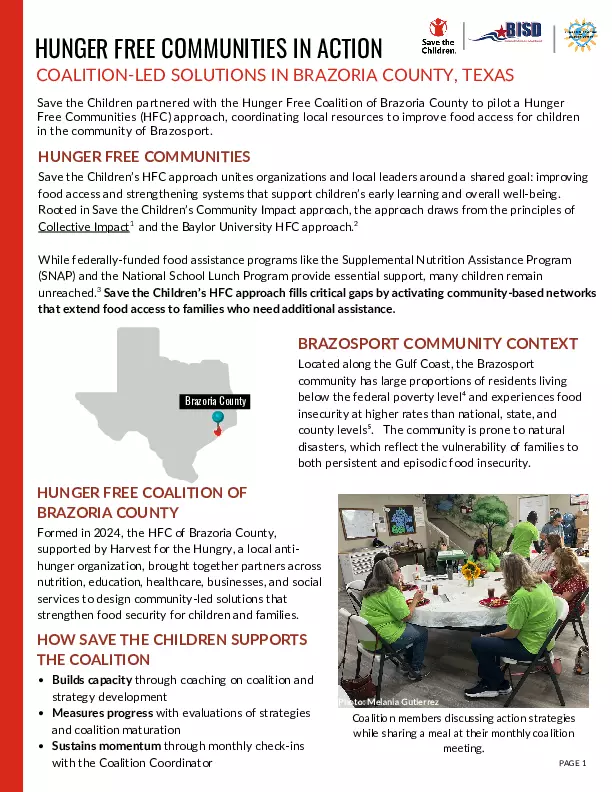
Hunger Free Communities in Action: Coalition-Led Solutions in Brazoria County, Texas
2026 · Save the Children
This brief highlights a coalition-led effort in Brazoria County to reduce child hunger and strengthen community systems that support children and families. Through the Bridge the... View Full Abstract
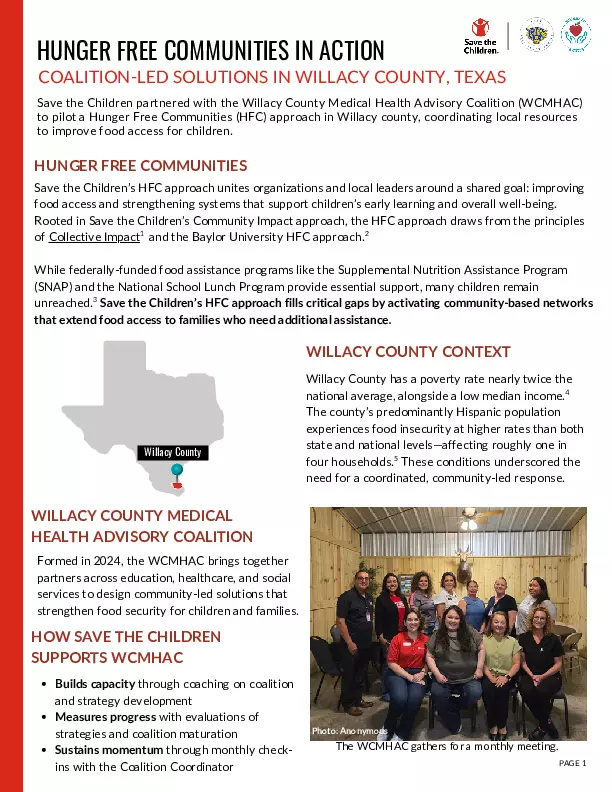
Hunger Free Communities in Action: Coalition-Led Solutions in Willacy County, Texas
2026 · Save the Children
This brief highlights a community-led effort in Willacy County to reduce child hunger and strengthen systems that support children and families. Through a coalition partnership and... View Full Abstract
Hunger Free Communities Overview
Save the Children’s Hunger Free Communities (HRC) initiative supports local coalitions in designing community-led solutions to improve food access for children and families. In 2024–2025, the initiative was piloted in Brazoria and Willacy counties in Texas. Grounded in Collective Impact principles, the initiative helps communities coordinate resources, strengthen partnerships, and address gaps in access to food.
Many students across the U.S. rely on school meals as their consistent form of nutrition. During weekends or when school is not in session, they lose access to nutritious foods. Both coalitions recognized this need within their communities and acted to change that. The HFC of Brazoria County implemented Bridge the Gap, distributing and delivering food to families during school breaks. The Willacy County Medical Health Advisory Coalition started the first Backpack Program in the county, offering food to students during weekends.
Our evaluation of HFC in Texas found that these early coalition-led strategies successfully reached some of the communities’ most vulnerable families — including households experiencing disproportionately high rates of food insecurity, poverty, and disability. Caregivers also reported reduced financial strain and improved access to food as a result of participation.
What’s Next?
The Hunger Free Communities approach will be embedded into Save the Children’s REaL Impact Network coalitions that have identified food security as a barrier to children’s learning. By adopting the HFC approach, coalitions will develop strategies to close the food access gap in their communities in support of kindergarten readiness or grade level proficiency in math or reading.
Have Questions? Please contact Anita Drever, adrever@savechildren.org

Share
Link