Global Malnutrition Initiative
Share:


This article provides an overview of Save the Children's "Global Malnutrition Initiative", Save the Children's effort to find ways to reach more children for treatment of acute malnutrition and support them to remain well nourished. It provides an overview of completed and ongoing research on community-based treatment of child wasting, optimal support, training and supervision for Community Health Workers; and on relapse.
THE CHALLENGE
Wasting (acute malnutrition) remains one of the most urgent threats to child survival globally, affecting – as of 2025- an estimated 42.8 million children under five. Despite the fact that highly effective treatment exists, coverage remains critically low, with up to 80% of affected children not receiving care.
Barriers to accessing treatment are particularly acute in fragile and conflict-affected contexts. Long distances to health facilities, transport costs, limited health system capacity, and fragile supply chains all reduce access to timely care. These challenges reduce access to timely care, resulting in less effective treatment, preventable child suffering, and higher child mortality.
In many settings, relying only on clinics and health centers isn’t enough to reach the most vulnerable children. This shows we need new approaches to delivering care — ones that can work even in remote places with few resources.
WHAT WE KNOW
There is robust evidence on how to improve nutrition outcomes for children. However, gaps remain for key populations, particularly children that live far away from health facilities.
The main approaches to diagnose and treat malnutrition are facility-centered: these rely on children being brought to a fixed health center or hospital for screening and treatment. Two alternative delivery models are mobile clinics, where health workers travel out to remote communities to screen and treat children on-site, and smaller local outposts offering care closer to where families live — outpatient treatment programmes (OTP) for children with severe acute malnutrition, and targeted supplementary feeding programmes (TSFP) for children with moderate acute malnutrition.
Save the Children has been researching ways to reach more children for treatment of acute malnutrition for a decade, and the body of research is now significant. As part of a focused and protracted effort we called Global Malnutition Initiative (GMI) this research has focused on:
- Better understanding why some of the children who successfully complete malnutrition treatment become malnourished again shortly afterward (relapse), how often it occurs, or what steps would most effectively stop it.
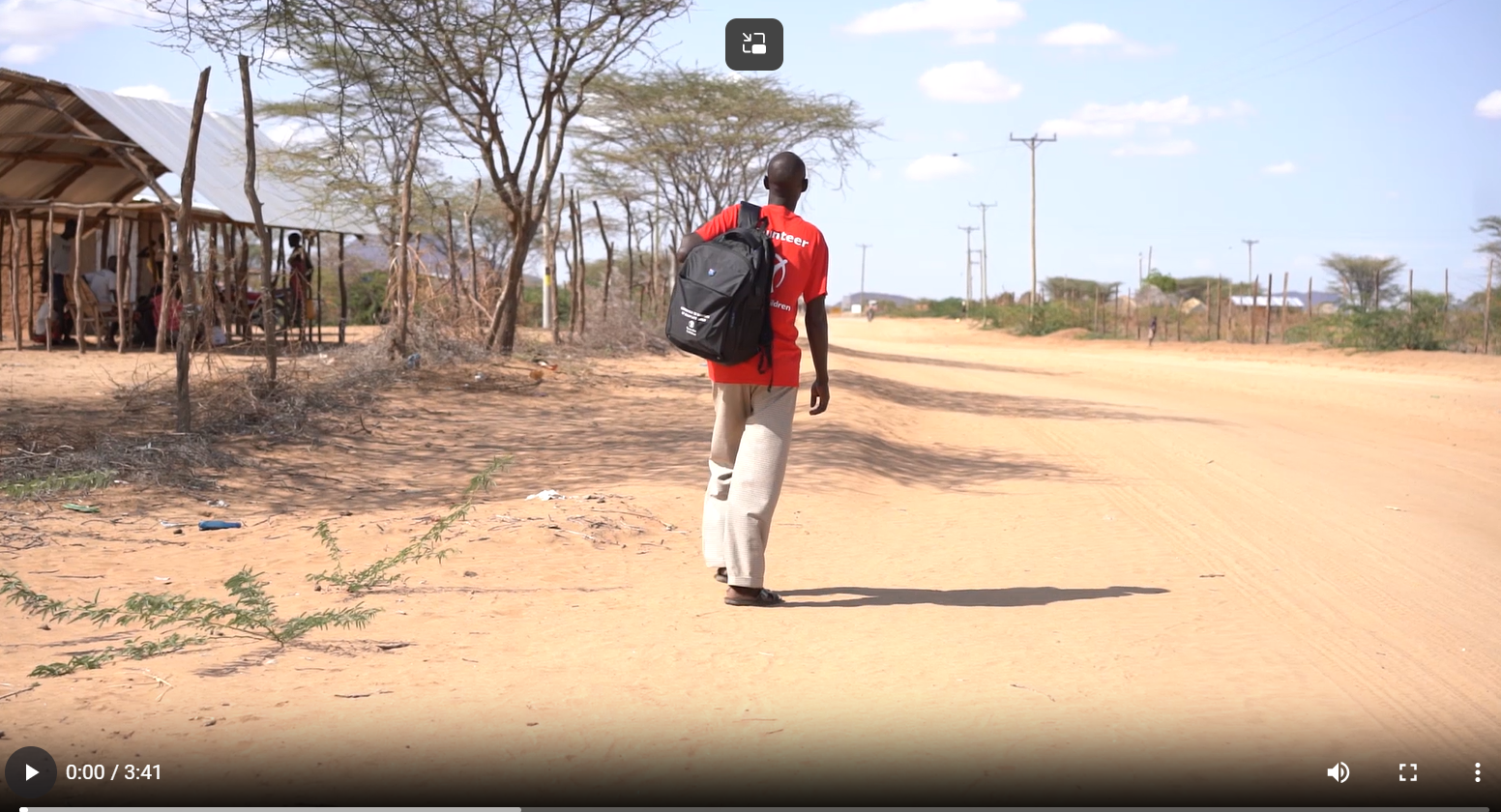
- Expanding access to life-saving treatment by shifting care closer to households and communities. The approach centres on empowering community health workers (CHWs) and integrating nutrition services into existing community-based health platforms. CHWs are trusted local community members, who receive basic health training to support families in their communities.
Community-based management of wasting
CHWs are trained to screen, identify and treat acute malnutrition at community level, reducing reliance on facility-based services.
- Integration of community-based platforms and primary health services
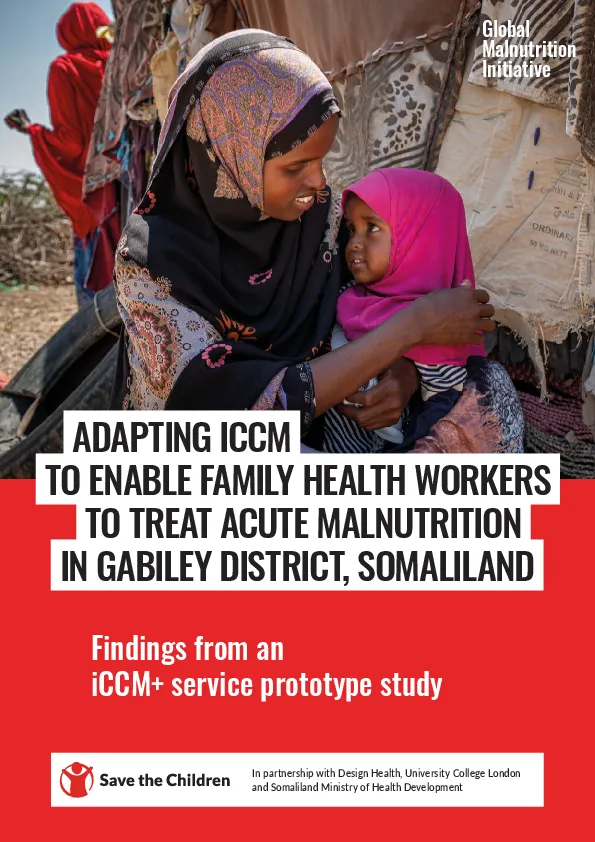
Nutrition services are embedded within integrated Community Case Management (iCCM), a community-based approach that enables trained CHWs to diagnose and treat common childhood illnesses close to where families live. Embedding nutrition services in iCCM enables a more comprehensive response to child illness.
- Local system strengthening
Ministry of Health clinic staff are supported to regularly supervise CHWs and keep them stocked with supplies, so care stays consistent between the clinic and the community.
- Iterative service design and testing
Pilot programmes are tested, and operational models are refined accordingly, to improve feasibility, acceptability, and effectiveness of CHW led management of wasting in diverse contexts.
This model is supported by updated global guidance, with the 2023 World Health Organisation (WHO) guideline on the on the prevention and management of wasting and nutritional oedema (acute malnutrition) in infants and children under 5 years recognising the role of CHWs in managing wasting where appropriate training and supervision are in place.
What have we learned so far on community-based management of wasting?
Community acceptance and feasibility
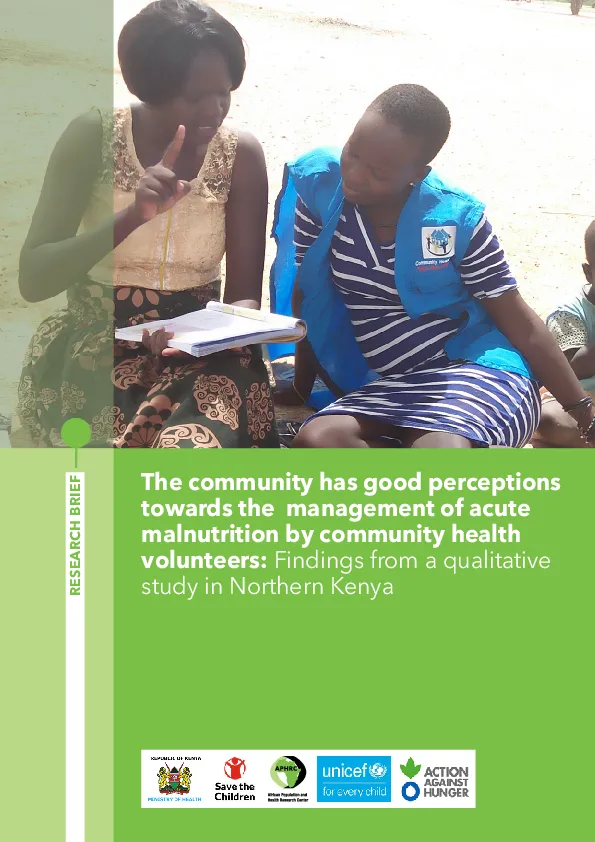
Qualitative research in Northern Kenya shows that caregivers and community stakeholders perceive CHW-led treatment as:
- Accessible
- Acceptable
- Responsive to local needs.
A caregiver for instance said “I was very happy when the child was recruited to the program. The child improved weight, increasing in kilos. The child was dull before but after receiving the supplements child is now lively and very ok …” Focus Group Discussion, Caregivers, Isiolo, Kenya.
Likewise, Community Health Workers described the experience positively, emphasizing their ability to follow up with parents “…Treating malnutrition at home was very good because there are many defaulters who would feel tired of going to hospital…Treating them at home has helped us because you know that mother, you go to her and tell her what to do…so you follow up on that.” FGD, CHVs, Isiolo.
Increased access to treatment
Evidence from the Somali and Kenyan contexts indicates that adding malnutrition treatment to existing community health programmes can help more children get the care they need.
In one cluster-randomised trial in Somalia, many more children received treatment in areas where community-based care was introduced — though the results weren’t statistically strong enough to be considered conclusive.
In Kenya, a study we supported demonstrated that communities, parents and caregivers have very positive opinions of the availability of malnutrition treatment within existing community health programmes. Community delivery of nutrition services also reduced key access barriers such as distance, cost, and time, making it easier for caregivers to seek care for children
Cost-effectiveness
Integrating treatment of into community health systems, first and foremosts, can reduce the costs for families. To get a child diagnosed and, if needed, treated, caregivers to spend money and time to travel to healthcare facilities – which can be very far from their homes and hard to reach,
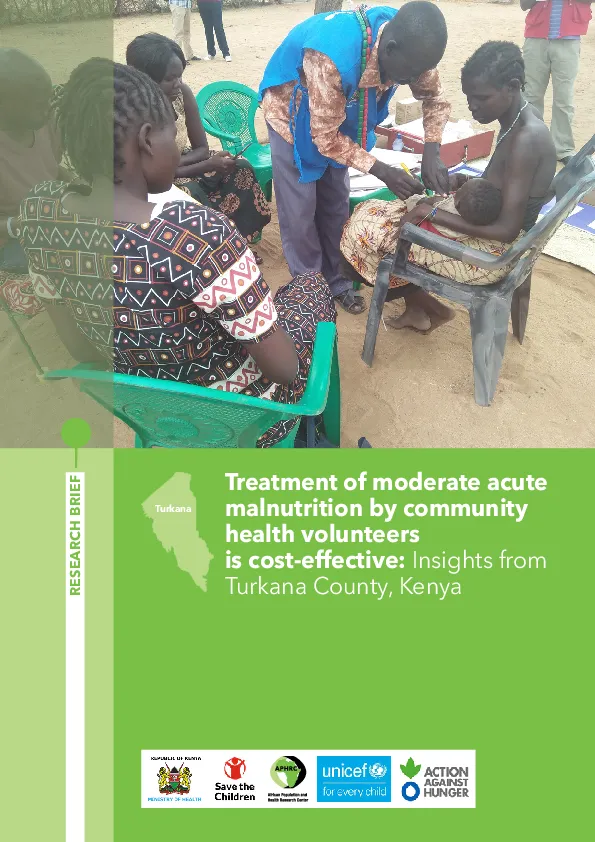
Evidence shows that integrating the treatment of malnutrition into community health systems can also be more cost-effective to those funding and providing treatment compared facility-only approaches.
- Lower cost per child treated and recovered
- Lower cost per disability-adjusted life year (DALY) averted
- Overall improved value for money compared to standard facility-based care
These findings indicate strong potential for scaling community-based models in resource-limited settings.
Key implementation considerations
While results vary across contexts, the evidence indicates that bringing treatment closer to home is a viable pathway to reaching more children with life-saving care. While promising, community-based treatment requires careful design and sustained support. Evidence highlights several critical factors:
- Training and supervision
To ensure quality service delivery training should be practical and interactive, using the tools and resources available in the community. The catchment area should be considered to ensure that supervision is supportive and builds capacity of CHW. Clear reporting lines should be established between MOH and implementing NGO.
- Quality assurance
Misdiagnosis rates can be high without adequate training and oversight: correct diagnosis and adherence to protocols is essential to avoid over- or under-treatment.
- System integration
Strong links between community services and health facilities are needed for referral, escalation, and continuity of care.
- Operational design
User-centred approaches can help address practical challenges and improve service delivery. There is a need for implementation research and documentation of practices to guide policy makers and practitioners around the best way to implement this approach across different contexts.
Photo: Mustafa Saeed / Save the Children (CH1834936)
Huda*, Female Health Worker in Somalia
WHAT HAVE WE LEARNED SO FAR ON RELAPSE?
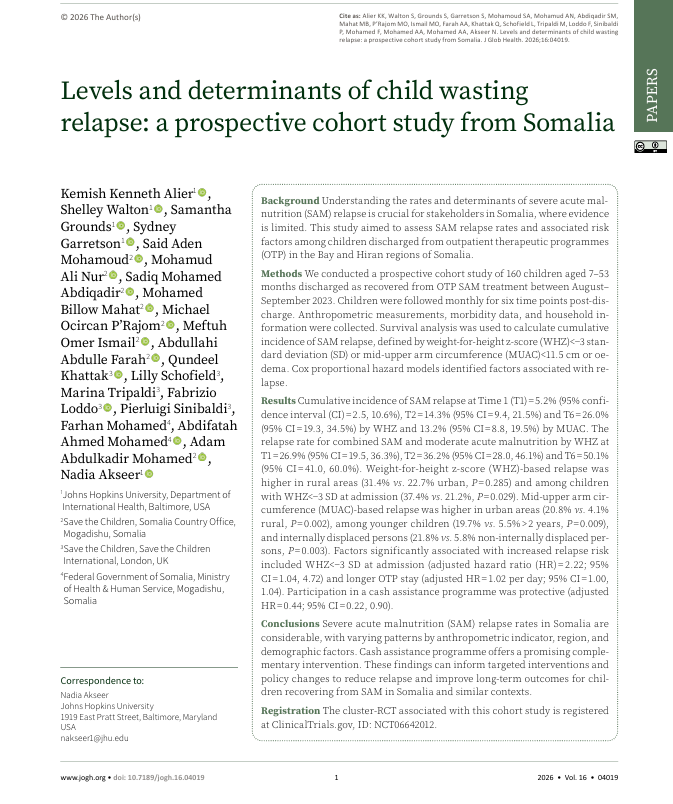
In 2023-24, Save the Children partnered with researchers from Johns Hopkins University and Somalia’s Ministry of Health to conduct a rigorous study of what happens after children recover from severe wasting. The study followed 160 children under five years of age for six months after they left treatment programmes in the Bay and Hiran regions of Somalia, with researchers carrying out regular follow-up visits to track children’s growth and health.
The research found that recovery is often fragile: around one in four children relapsed into severe wasting within six months of discharge. The study also identified factors linked to a higher risk of relapse, helping to build evidence on which children may need additional support after treatment.
Importantly, the study found that children in households receiving cash assistance through a Save the Children-supported programme were less likely to relapse. This suggests that combining nutrition treatment with support to address food insecurity and financial hardship can help children maintain their recovery. The findings are helping strengthen the evidence base on how to support children not only to recover from wasting, but also to stay healthy after treatment.
REMAINING EVIDENCE GAPS
The evidence is consistent that CHW can effectively diagnose and treat malnutrition if they receive sufficient training, supervision and support. However, questions remain.
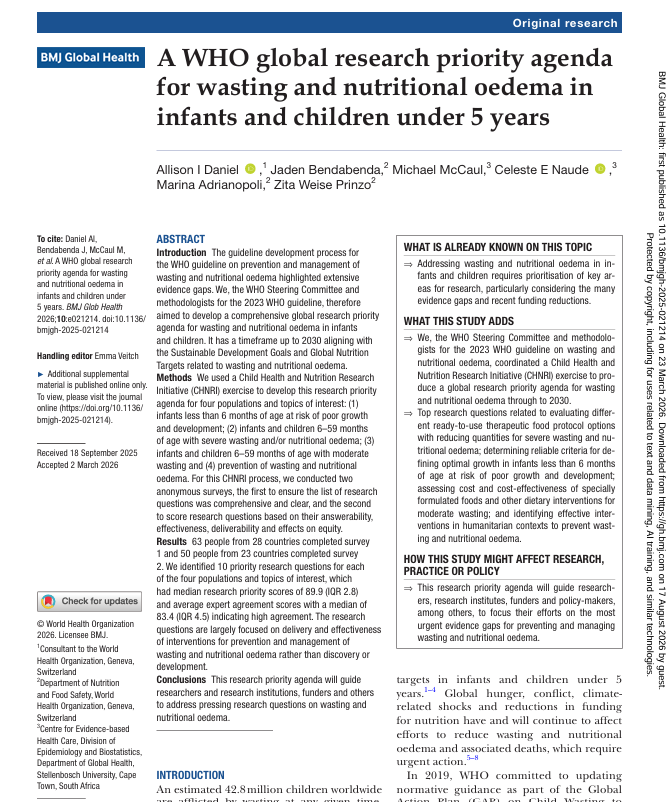
In March 2026, the WHO published a global research priority agenda for wasting and nutritional oedema in infants and children under 5 years. In it, three main topics appeared among the 10 highest-priority research questions for infants and children aged 6–59 months with with severe wasting and/or nutritional oedema:
- how ready-to-use therapeutic food (RUTF) should be used,
- how community health workers (CHWs) can support treatment, and
- how to better understand and prevent children from relapsing after recovery.
LOOKING AHEAD
The Global Malnutrition Initiative is contributing to a growing evidence base supporting community-led models of care for malnutrition.
Save the Children is currently generating and disseminating evidence on some of the WHO-identified priorities, – and aims to continue to do so in future.
In particular, we are currently focusing on:
CHWs-led treatment: Understanding which standards, systems and processes can best ensure Community Health Workers’ treatment is effective and scalable in different contexts.
Relapse: Key open questions include what specifically drives relapse in these unstable environments (such as food insecurity, disease, displacement, or gaps in follow-up care), how widespread the problem really is, and what kinds of follow-up support or programme design changes could help children stay healthy after treatment ends.
In relation to the CHW question, our current and future priorities include:
- Defining – and scaling – effective CHW-led treatment models
- Strengthening supervision and quality assurance systems for FHWs, documenting lessons learned along the way
In Kenya, we are also working with UNICEF, the Kenyan Ministry of Health and Concern to compare CHW-led treatment with other approaches in Kenya, as well as continue doing implementation research to answer some of the remaining evidence gaps.
We are currently seeking funds and collaborations to gather more evidence on relapse.
Our findings will update Save the Children’s programs and inform donor and government investments.
Our Partners and Funders
We collaborate with leading academic institutions such as University College London, Johns Hopkins University, Amoud University and DesignHealth. Together, we aim to enhance nutrition outcomes through evidence-based research and strategic interventions.
The project was generously funded by the Innocent Foundation, the United Kingdom Foreign, Commonwealth and Development Office (FCDO), and Save the Children Italy private funding.
CONTACTS – HAVE QUESTIONS?
For more information about the GMI initiatives and its research outputs, please contact Lucy Lafferty, Senior Nutrition Adviser at Save the Children UK, [l.lafferty@savethechildren.org.uk], Lilly Schofield, Sr Evidence and Learning Adviser at Save the Children UK [l.schofield@savethechildren.org.uk] or explore the full collection of reports, briefs, scientific publications, and videos below.
Related Documents
Showing 4 of 10

Share
Link